Monday, 14 July 2014

Friday, 28 March 2014
葛瑞格.博亦德博士 (Dr. Gregory Boyd)
诚实质疑的牧人:葛瑞格.博亦德博士 (Dr. Gregory Boyd)
Boyd以“开放神论”(Open Theism)提出:如神所预知的事,就必然发生,那人的自由意志是否还有意义?
当神藉先知以赛亚告诉希西家王“你必死”之时,神如已确知希西家必会求情而自己也将应允而医治他(列王纪下20章1-7节),他那斩钉截铁的预言岂非成了谎言? Boyd因而提出了“容许可能性的神”的观点(详见God of the Possible,2000)。
Boyd所提出的看法是:神虽有主权命定一切,预控一切,却选择赐人自由意志,并容许人行使自由选择,因他不愿人如机器人般被迫选择爱他、顺从他。再者,若人一切的抉择都由神预定,又怎能要人为其抉择负责,甚而为错误的抉择下地狱? 此外,若一切由上帝掌控,又为何会有堕落的天使、罪恶和苦难呢?
Boyd认为“敢于”赐人自由意志,却又能掌握宇宙历史方向的神,权能岂不更大?但他不像人间的权势,须藉高压控制(power over)他人来彰显自己的权能,却反以基督谦卑服事牺牲(power under)来赢得人心、建立衪的国度。
摘自:http://www.cap.org.tw/W/w-181-3.html
Wednesday, 22 January 2014
“YOU DON’T HAVE TO ATTEND EVERY ARGUMENT YOU’RE INVITED TO.”

“YOU DON’T HAVE TO ATTEND EVERY ARGUMENT YOU’RE INVITED TO.” (你不见得一定要出席每一个争执的邀请)
“You mean I don’t have to defend myself or my point of view? But what if they’re saying things that aren’t true? Shouldn’t I correct them?”
An argument is when two people are engaged in the process of making the other person wrong, thus proving that they’re right. Both sides gather all the information they have and from their position, there is an attempt to get the other person to surrender to a new point of view. It can be a fun, educational process, or it can be a hurtful process of separation.
If the argument is an educational process where everyone gets to learn and grow, then what a wonderful thing! This is where two or more are gathered and allows for a magical new perspective to emerge, where a third point of view is discovered that embraces both points of view, and a win/win situation is created. Let’s enter into these types of arguments because it generates newness and expansion is experienced.
If, however, the argument is a hurtful process of separation, where everyone holds onto their position of rightness, pretending they know all that is to be known, then no - let’s not attend to these types of arguments.
The challenge often is: How do we gracefully back out of the hurtful argument without insulting the other person, or further engaging them in their desire to make us wrong? How do we walk away from an argument with dignity?
You could simply say, “I want to take a break to think about this, let’s talk later.” Or, “Can we agree that it is okay for us to disagree, because I sense this is going to be one of those areas that we are going to see it from different points of view?” Or, “I’m not sure we are going to resolve this right now, let’s let the ‘dust settle’ and revisit this at another time.”
There are times when the other person insists on arguing their point. These types of situations require another type of skill set. The best thing to do here is to do the “active listening” technique I describe in The Keys to Joy-Filled Living. It’s also helpful to remember it’s hard to argue with someone who does not want to argue with you.
The key here is to stay in our power, our loving, our neutral, and our peace. When we walk through life from this perspective, we can see the learning and what is for the Highest good for all concerned. If we find ourselves being disturbed or knocked off our center, it is often best to take that break so we can regroup and re-center into the our power. This is an ongoing process of choosing to let go of our position of rightness and moving back into our position of loving.
Wednesday, 18 December 2013
Top 10 Ways to Fail a Bible Paper
While I was grading papers a couple of weeks ago, I thought it would be funny to write a few tweets with common student mistakes. This turned into a “top ten list” of things I have consistently read over my 23 years of grading Bible papers. I posted the Top Ten list using BufferApp.com over a couple of days. (By the way, follow me @Plong42.) The tweets were very popular, most were re-tweeted and there was a fair amount of sympathy among other Bible teachers. I thought I would post the list with a little clarification.
 I want to make a few clarifications. There is no one student in mind for any of the Top Ten. Sadly, these are the types of things that regularly turn up in undergraduate Bible papers, from freshmen to seniors. Most of my students are very bright and write excellent papers. Occasionally even the best students slip one of these dingers into an otherwise good paper.
Perhaps I should have titled the list, “things to avoid when writing a Bible paper” since I am not sure anyone has failed for including something on this list (although for three or more of these in a single paper, I might just have to fail you!) For my present and future students: avoid these mistakes!
#10 – “My youth pastor told me that. . .” I have always been impressed with the influence that a Junior High Youth Pastor has on their students. Students really remember things they taught four or five years in the past, often clinging to that reaching tenaciously.
#9 – Pauline Lit Paper, only quote Jesus. The opposite could also happen, although I have had more non-Jesus papers that quote the Gospels than Gospels papers full of Pauline theology. This is an understandable mistake for some students who are raised in churches that preach the Gospels far more than the Pauline letters. It is very hard to bracket out Jesus when reading Paul, but in order to hear Paul’s voice, that has to be done.
#8 – Any of these words: Satin, Pilot, Angles. This is a bi-product of using Microsoft Word to write papers. These are spelled correctly, but they are the wrong word. If I had a nickel for every paper that mentioned the “Angle of the Lord” or Satin tempting Eve in the Garden, I could retire to my own private island. I could have added “Cane and Able” to this list. My all-time favorite is spelling mistake: “Matthew wrote to the Jews, Luke wrote the Genitals.”
#7 – Referring to scholars by their first name: “As Tom says in Challenge of Jesus.” I get this one often, and it perplexes me when the first name is very common. I can understand this when citing Gary Schnittjer, author of The Torah Story (I cannot spell his last name right either!)
#6 – “As biblical Scholar J. Vernon McGee says….” I got some grief for this one when I posted it since McGee is still in print and respected. My point here is that McGee was a preacher, not a biblical scholar. If I have assigned a research paper, McGee is not really an appropriate source. I would include quite a few popular writers here as well: MacArthur, the “Be” Series from Warren Wiersbe, Rick Warren, Chuck Swindoll, etc. These are all good writers and popular, but not really the sort of scholarly material I am looking for. I am also bothered by Matthew Henry, mostly because students cite a reprint of the shorter commentary on the whole Bible, without any awareness at all that died in 1714!
#5 – Comparing Jesus and Spiderman. Or Doctor Who, or Star Wars, or any other popular hero. Part of the problem here is that the student is trying to curry favor by name-checking something they know I like. These are analogies that might work if you are teaching or preaching, but they do not work as well in a research paper for a biblical studies class.
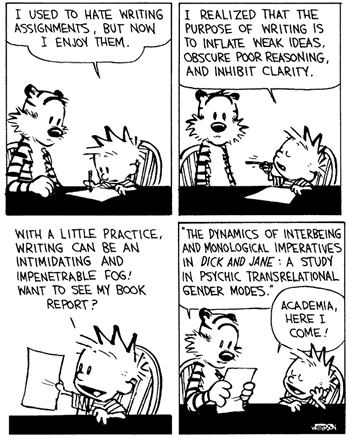 #4 – 1000 word paper, 500 word block quote. I just ignore block quotes when judging the completeness of a paper; I want 1000 of your words. The classic example of this was from one of my first college classes. Page one of the paper was the entire parable of the Prodigal Son in quotes, page two was a slight retelling of the same story, with nothing else said about it. I am not a fan of long block quotes; if they must be used, the student needs to interact with the quote. Introducing a block quote with “N. T. Wright says it best….” then pasting 500 words is not going to put me in a good mood.
#3 – “In The Message translation it says….” This problem is more serious because the Message is not a translation, but a devotional interpretation of the Bible from a single individual. I happen to enjoy reading Eugene Peterson, and I find his paraphrase refreshing and often it accurately catches the gist of a passage. But it is not a translation and should not be cited as Scripture. While this rarely happens in a Bible paper in my classes, I am equally annoyed by changing translations in order to find one that says what you want it to say. Yes, I am looking at you, Rick Warren.
#2 – “Dictionary.com defines justification as….” This is the most serious problem on this list. Online dictionaries are usually out of print, so the definitions do not necessarily reflect current usage. The real problem is that the meaning of the English word “justification” is not really what Paul had in mind, since he was writing in Greek 2000 years before dictionary.com existed. Biblical words must be defined using appropriate Greek and Hebrew lexicons, not modern dictionaries. By “appropriate” I am disqualifying Modern Greek resources (Google Translate, for example) and Strong’s numbers.
#1 – “For many thousands of years people have debated….” This is by far the most common silly way to start a paper. To state in the opening sentence of a paper that people have been debating Paul’s view of justification for many thousands of years is untrue since Paul wrote only two thousand years ago, and that for most of that period people did not debate the topic. Maybe “for the last few centuries” or “since the mid-twentieth century,” but not since the dawn of creation.
That is my top ten, I am sure there are more that could be added to the list. Some of these are serious, some of these are just silly. Please add to the list in the comments, I would love to hear your experiences!
Thursday, 12 December 2013
同理(empathy)"与"同情(sympathy)
William Safire公认是词源学的专家,他在2008年给了"empathy"与"sympathy"清楚的界定。对观众来说,对角色感到同情是正常的,不过可别觉得这样就够了,如果这样的话,观众会将情感抽出。Safire说:如果你认为同理跟同情是相同的话,那么我很抱歉你搞混了,回到希腊时代,感伤力(pathos)就是情感(emotion),"同情"是因为你替别人的处境感到难过,算是"忠诚(allegiance)"这种感受的一种;而"同理"则是从别人的内心或是一件作品之中去感受,不管它是视觉艺术,戏剧或是歌舞剧,不管快乐或悲伤,轻松或是紧张。希腊"sym"这个字首意谓"一起或是靠着";而动词字首"em"更深入,指"在里面或是内部",当你感觉" 同情"的时候,你将手臂环抱着这个人;当你"同理"的时候,你脑袋里的想法或思绪跟对方的一致,两者差别非常大。
"If you think empathy is the synonym of sympathy, I’m sorry for your confusion. Back to the Greeks: pathos is “emotion.” Sympathy feels pity for another person’s troubles, secondarily a sense of allegiance; empathy identifies with whatever is going on in another’s mind or in a work of art — visual, dramatic, musical — whether merry or morose, hanging loose or uptight. The Greek prefix sym means “together with, alongside”; the verbal prefix em goes deeper, meaning “within, inside.” When you’re sympathetic, your arm goes around the shoulders of others; when you’re empathetic, your mind lines up with what’s going on inside their heads. Big difference; no nuance."
Thursday, 28 November 2013
浅析以赛亚书第七章“以马内利”预言的应验与应用
专文题目:
浅析以赛亚书第七章“以马内利”预言的应验与应用
(Analysing the fulfilment and
application of “Immanuel” Prophecy
in Isaiah chapter 7 )
绪论
以赛亚书第7章这段经文有它本身的逻辑[i]。在当代的某一时刻,人获神提供行使信心的关键性机会,而在这机会过后,就只有因不信而来的审判。亚哈斯王拒绝了信靠耶和华而选择己路,他因缺乏信心而受审判,也引来王朝与国家的审判。[ii]在耶和华的异常愤怒之下(13节),先知宣告了“因此主自己要给你们一个兆头:看哪!必有童女怀孕生子;她要给他起名叫‘以马内利’”(14节)。
这一节经文常被指在亚哈斯王大敌当前,神应许以马内利,预言基督奇妙的出生(太1:23)。[iii]但是这对当时亚哈斯王所面对危难的局势起了远水救不了近火的作用。“以马内利”这名字的意义是什么?兆头、孩子与母亲是指向谁?本文尝试聚焦在以赛亚书第7章的历史背景,从上下文来浅析“以马内利”预言的应验与应用。
历史背景
以赛亚书第7章描述在公元前735年,亚哈斯承继约坦王作犹太王时,适逢亚述势力高涨,并于主前735年西侵(称Syro-Ephraimite War)。北国以色列(Israel(Ephraim))与亚兰(Aram(Syria))联盟对抗亚述,并力邀犹大加盟。但犹大拒绝,他们于是挥军南下要逼使犹大就范(参王下16章)(参看附录(一)亚述帝国版图)。
在这混乱危急之际,以赛亚奉命神谕鼓励亚哈斯王坚持中立,不向以色列与亚兰军屈服,也不向亚述求助,单单仰赖神。不料却遭犹大王亚哈斯拒绝。这时,以赛亚奉主名责备亚哈斯王并预言北方二王必败亡。但亚哈斯王不信[iv],耶和华必使亚述王来攻击犹大。在这情况之下耶和华自己却要赐下一个最伟大的神迹,让亚哈斯王晓得,他错失了一个信靠耶和华的好机会。[v]
1)“以马内利”里的“童女”与人选。
以赛亚邀请亚哈斯王向上帝求一个“记号”(希ot,和合本译作“兆头”,提醒之物如立约的天虹、祸灾、神迹)。7章11节耶和华告诉亚哈斯王在深处或在高处向他要求显一个兆头。这可能是让小信的亚哈斯王目睹如地震、闪电、打雷、下刨甚至是日月停留的超自然现象。[vi]此时,上帝藉以赛亚宣告一个 “童女怀孕生子”记号。
有学者认为把almah译作“处女”(英virgin,KJV、NIV)可能太过狭窄,因为只着重其没有性经验,却未说明是指已经性成熟的年轻女性。[vii]但是若把它译作“少妇”(英young woman,NRSV、Tanak、吕振中)又太过宽松,因为误把已婚的年轻妇女也包含在内。主修旧约圣经的赖建国博士认为almah[viii]是“已达适婚年龄的年轻未婚女性”,中文译作“童女”(英maiden)乃是最合适的译法(和合本、新译本与和修本)。[ix]《旧约先知书要领》的作者则认为7:14节的重点不是“处女”,而是一个年青可生育的女子,因为“处女”另有一个词betulah(希)[x]《旧约圣经注释–以赛亚书》认为betulah应该是(或可能是)指童女,可是其依据乃是上下文,而不是该字的本身。所以这字的概念是“适婚年龄”。[xi]
《旧约先知书要领》指出7:14节的almah是有定冠词,所以不是指任何的一个女子,而是指特定的“那个女子”,以赛亚及亚哈斯可能认识的女子。[xii]7:16节所描述“这孩子还不晓得弃恶择善之先”与8:4“这小孩子不晓得叫父母之先”的意思平行,因此有些学者认为“以马内利”这孩子就是以赛的儿子,而“那个女子”是指以赛亚之妻。[xiii]因此当年亚哈斯的王后、以赛亚的妻子、那些当时正在怀孕的妇女都有可能是“以马内利”预言中的“童女”。
2)“以马内利”预言的不同说法。
“以马内利”作为一个记号,应被看为是当时的记号,还是将来的确证?按理耶和华既然在第7章的情况下应许要生一个小孩为记号,而15-17节意味以马内利将在亚述侵入犹大之后出生,看来这名小孩应当与当前的危机有关。大家都会很自然的求问有关这预言里的孩子是谁?他的母亲是谁?以下是笔者综合了一些学者的看法:
一、赖建国在《旧约中的弥赛亚预言》[xiv]中提及历来对“以马内利”的候选人有几个种讲法:a)亚哈斯王之子希西家。但是问题是公元前716年希西家王登基时已经25岁(王下18:2)。b)指那些当时正在怀孕的妇女。c)以赛亚先知之子玛黑珥.沙拉勒.哈施.罢斯,意思是“掳掠速临、抢夺快到”。可是8章3节称以赛亚先知的妻子为“女先知”而非“童女”(almah),而出生后的儿子也没命名以马内利。d)马利亚之子耶稣。这是新旧约圣经中唯一说到应验此预言的经文,也是基督教有关道成肉身、童女生子、基督人性等重要教义的根据。
二、马有藻则在《神必救赎–以赛亚书诠译》[xv]中分析 “母子”的配对。条件是孩子的诞生是兆头(普通的诞生不能成为兆头),他的母亲必是未婚的童女(普通的童女需要同房才能产子)。孩子的诞生将神的救恩带进人间(普通的人不能将救恩带入世界)。因此,马氏认为只有马利亚及耶稣才能应验此预言。因为以赛亚也不敢称其妻为童女,而任何母亲绝对不敢轻易命其子的名为“以马内利”。
|
|
母
|
子
|
代表人
|
|
1. 历史应验说
|
以赛亚之妻
亚哈斯之妻
|
8:3
希西家
|
H.M. Wdf
J.S. Oswalt
W.C Kaiser
|
|
2. 双应验说
|
任何历史应验配对
马利亚
|
任何历史应验配对
耶稣基督
|
J.D
Pentecost
J.Ridderbos
G.W. Grogan
|
|
3. 单应验说
|
马利亚
|
耶稣基督
|
E.J. Young
J.A.
Alexander
C.L.
Feinberg
|
三、《以赛亚书注释》[xvi]的作者苏仪(John F.A.
Sawyer)表示其中一种传统的犹太人的解释法,认为这孩子就是希西家,而他的成孕与出生,是由先知在亚哈斯年代奇妙的预告,向耶路撒冷宣示所盼望的时代曙光的来临。若不管希西家出生日期的历史问题(按照王下18:2,他在主前725年为25岁),这种解释的优点是可以认识一些关于大卫的神谕的经节,像9章6至7节;11章1至5节。这便成了一个宣告,指明在耶路撒冷将会永远有王接续大卫的宝座。
另一种主要的犹太解释法,主张“童女”是先知的妻子,好像8章3至4节;而“以马内利”就是以赛亚第二个儿子的名字。而基督徒传统的看法受了上文,以及第9、11章相同例子的影响,认为孩子就是主耶稣,耶稣是另一位“大卫的子孙”,而他母亲马利亚便是那位童女。
小结:
“预言”在旧约时代,先知的主要任务不是预言未来要发生之事,而是宣告神向他们启示的旨意。先知是蒙神呼召的报信者,负责宣布从上而来神要传给众人的信息。[xvii](参考附录(三)预言将来发生的事情[xviii]。)另一方面,“预兆”也是神应许的记号,未必指当时立刻发生。圣经中的预言均出于耶和华应许,其应验往往要经过时间的间隔,需要人耐心等候,以信心来支取。给团体的应许,有时相隔时间较长,要经过数代或经过数百年才成就或应验。[xix]
3. “以马内利”的应验(fulfilment)。
《旧约先知书要领》提出,诠释圣经必需关注经文的历史背景,这样才能明白先知当时面对的情况及其适切的信息。所以作者强调以赛亚当时宣讲这个记号,就是表明这个记号必然与亚哈斯王及当时国家的景况有关系。[xx]
“以马内利”的应验可以从两方面来看。第一、在亚哈斯王拒绝信靠耶和华之后,以赛亚就宣告以马内利的预兆。可是这预兆不是给亚哈斯王的,而是宣告耶和华的全能,有待将来实现。[xxi]“以马内利”只见于旧约的以赛亚书7:14与8:8 。“神与我们同在”的神学意义可从“同在”(with)看出来:一面是“神”,另一面是“我们”。上帝主动要与人同在。这是旧约时代因常犯圣约而招来上帝审判的子民不可想像的事,也是旧约对救赎最大的盼望。[xxii]在新约,耶稣基督“道成肉身”“以马内利”在人间应验了上帝对大卫家的应许(参撒下7:8-17、撒下23:5)。上帝永恒救赎的计划没有因为当时亚哈斯王一人的不信而落空[xxiii]。
第二、赖建国指出解释本段预言的关键之一是在第7章的开头,特别提到耶和华吩咐以赛亚先知带着儿子施亚雅述(余剩之民将要归回)一起去见亚哈斯王(7:3)。他也指出16节:因为这孩子还不晓得弃恶择善(分辨的年龄)之先,北方二王的土地必被撇弃。“这孩子”究竟指谁?除了14节的“以马内利”指将来弥赛亚的预言,16节的“这少年”则是指与以赛亚一同前来的儿子“施亚雅述”,名字的意思是“余民必归回”。尽管北方二王嚣张,耶和华的心意却是要守护他忠信的余民归回。[xxiv]
本段经文的下文(第8章)给予另一个有力的解释有关当时的“以马内利”是谁。以赛亚先知另一个儿子的名字正是耶和华要传讲的信息。[xxv]以赛亚第二儿子,玛黑珥.沙拉勒.哈施.罢斯(掳掠速临、抢夺快到)不晓得叫爸爸妈妈以前,北方二国要被亚述国所灭(8:3-4)。在这近一步的预言中,先知加上新的要素(亚述),时间较第7章更加紧迫(孩子出生不久)。[xxvi]柯德纳(D.Kidner)对玛黑珥.沙拉勒.哈施.罢斯之意义解释的最为完全。他说:“以马内利的记号……虽与终极时件相关,却是当前未来的一种保证,无论以马内利多快会诞生,现今的威胁一定会先成为事实,这必发生在他能知晓之先。不过他诞生的日子没有说明:因此这里提供一个新的记号,只处理目前的状况。”[xxvii]
结论:
马太引用赛7:14的话来表明马利亚尚是童女时便从圣灵感孕,生下“神与人同在的”的救主基督。当七十士译本的译者用希腊文翻译旧约圣经时,他们用parthenos(腊)(参太1:23)来译以赛亚所用的almah。[xxviii]克鲁顿说parthenos 是指“一个保存了身体贞洁的未婚少女”。[xxix]这个“应验”的预言引起不少的争辩。以赛亚的原意是指一位当时他们所认识的一个年青可生育的女子,将在两、三年内(孩子懂性之前)出生,亚哈斯王便蒙神搭救,得以解除外敌的威胁,印证神与百姓同在。然而,从上下文看来,先知的视野不限于亚哈斯当前的危难与解救。经文多次论及日后神藉亚述征治百姓,南北二国均遭外敌毁坏,然而大卫后裔中有一婴孩生为“奇妙策士、和平之君”(9:1-7),治理百姓(11:1-16)。
这样看来,笔者认为是适宜把赛7:14视为有双重指涉的经文。意思说在亚哈斯时代,以赛亚的儿子应验当时的预言。而在700多年后,童女马利亚生下弥赛亚耶稣是预言的最终。[xxx]在耶稣的身上不仅“童女生子”的预言应验,“以马内利”这称号最终也得以应验,因为耶稣为罪人带来了救赎。在亚哈斯王背道的衬托之下,未来完美君王的亮光显得耀眼夺目(7:14、9:1-7、11:1-9)。在新约及至时候满足时,基督就照所定的日期来到(加4:4-5)施行救赎。在基督要离开时,他应许“……我就常常与你们同在,直到这时代的终结”(太28:20)。圣灵之后在五旬节时降临(使2:33、38-39),更是实实在在的与人同在。“神与我们同在”将一直持续到永恒 -“我听见有大声音从宝座那里发出来,说:“看哪!神的帐幕在人间,他要与人同住,他们要作他的子民。神要亲自与他们同在,要作他们的神。”(启21:3)
***********
参考书籍:
1.
坎伯. 摩根著,锺越娜译。摩根解经丛卷 - 以赛亚书。美国:美国活泉出版社。1985年。
2.
中国神学研究院。圣经新词典下册(K-Z)。香港:天道书楼有限公司,中国神学研究院。1996年。
3.
赖建国。旧约中的弥赛亚预言。香港:天道书楼有限公司。2013年。
4.
杨牧谷。当代神学辞典上、下。台湾:校园书房出版社。1997年。
5.
马有澡。神必救赎–以赛亚书诠译。台北:天恩出版社。2005年。
6.
黄嘉樑、梁国权、雷建华。圣经通识丛书–旧约先知书要领。香港:寄到出版社。2007年。
7.
莫德著,刘良淑译。丁道尔–旧约圣经注释–以赛亚书。台北:校园书房社。2001年。
8.
苏仪著,陈佐人译。每日研经丛书
– 以赛亚书注释上册。香港:基督教文艺出版社。1991年。
9.
詹逊。旧约精览。香港:宣道出版社。1989年。
10. 骆其雅著,詹正义译。圣经中所有弥赛亚预言。台北:财团法人基督教,中国主日学协会出版部。1980年。
11. 中国神学研究院。圣经-串珠.注释本。中国:中国基督教两会。2000年。
12. David Peterson. Christ and
his people in the book of Isaiah. England: Inter-Varsity Press. 2003.
附录一

Map taken from:Ancient Israel’s
Neighbors
附录二
7章1-17节平行结构
文学上,以赛亚书七章1至17节是首尾呼应的交叉平行结构,又称拱形结构,说明本段的文学整体性。开头论到大卫家受到北方二强(亚兰与以色列)的威胁(A,1-2节),结尾讲到将来还会受到亚述的威胁(A’,17节)。虽然雅伟两次预言北方二强必灭亡,不再构成对犹大的威胁(BB’),然而正如雅伟在安慰中有保证的话语,祂在责备中也有新的应许(CC’),而整段的中心转捩点(即拱顶)则是突显亚哈斯王不信的反应(X)。以赛亚的儿子(施亚.雅述 yasub 的意思是“余民必归回”)在本段两次出现,正好伴随有关北方二强的计划与败亡。如图下所示:
A 大卫家受北方二强威胁(1-2节)
B 以赛亚的儿子:北方二强的计划(3-6节)
C 亚伟保证的话语:应许吃兆头(7-11节)
X 亚哈斯不信的反应(12节)
C’ 雅伟责备的话语:应许赐兆头(13-15节)
B’ 以赛亚的儿子:北方二强的毁灭(16节)
A’ 大卫家受亚述帝国威胁(17节)
附录三
预言将来发生的事情
先知的预言有两种主题:
1)本国或国际将要发生的事件,包括长远的或短暂的、
2)耶稣作为弥赛亚的第一次与第二次来临。
读预言时,注意:
1)直接背景(例如预言跟亚述、巴比伦和波斯的关系)、
2)统治历史的神、
3)被拣选的民族(以色列)、
4)预言的四个重点 – 先知所说的预言,大部分环绕四个历史重点:
- 他们自己的时代
- 即将来临被掳(亚述及巴比伦),及其后的回归
- 弥赛亚之来临
- 千禧年
预言的四个重点图表
先知如站在高处,向前瞻望,把所见的讲出来。通常是揭发当时盛行之罪恶,然后向远处望去,看到民族被掳离开故土,又见到犹太人终于回归。有时圣灵让先知愿望,见到将来弥赛亚的来临,甚至预言神的子民在千禧年中荣耀的复兴与平安。

[i] 第7章是在审判的预言中的第一部分,大多数与犹大和耶路撒冷有关。其中提到的王有乌西亚、约坦、亚哈斯。坎伯.
摩根著,锺越娜译。摩根解经丛卷 - 以赛亚书(美国:美国活泉出版社,1985年),页1。
[ii] 中国神学研究院,圣经新词典下册(K-Z)(香港:天道书楼有限公司,中国神学研究院,1996年),页152。
[iii] 赖建国,旧约中的弥赛亚预言(香港:天道书楼有限公司,2013年),页128。
[iv] 附录(二)。7章1-17节平行结构。同上,130-131。
[v]《当代神学辞典下》页 152,分析:以赛亚显然认为这场威胁只是短暂的(赛7:7、16),但这时刻对神子民的将来却是决定性的。先知认为,在面对此威逼时,若拒绝单以耶和华为保障,而要在世上任何的军事盟约中寻求安全,那么,不单当时的君王(亚哈斯),甚至整个大卫王朝都显出了它的不信。因此,以赛亚将亚哈斯跟整个王朝等同(7:2、13、17),提倡对耶和华全然依靠的政策,警告说,亚哈斯相信与否会决定王朝与国家的命运(7:9),以赛亚又奉耶和华的名,提供一个极大的兆头,差不多使人不得不相信(7:10-11)。亚哈斯拒绝这提议后,以赛亚说出另一个兆头,就是“以马内利”的预兆;全国的盼望会因亚述的胜利而幻灭(7:14起)。
[vii] 赖建国,旧约中的弥赛亚预言(香港:天道书楼有限公司,2013年),页135。
[viii] almah在旧约中有几个不同的用法:一、音乐用语(代上15:20;诗46)。二、不确定,但可能指未婚童女,例如,击鼓的女子(诗68:25),指两性吸引(箴30:19)及渴望有良人匹配(歌1:3)。三、确定指未婚童女,almah单独使用,不必另加说明或解释,例如,利百加(创24:43)、米利暗(出2:8)及宫廷中的童女(歌6:8)。同上,页132。
[x] 参创24:16;利21:3。
[xiii] 同上。赖建国,旧约中的弥赛亚预言(香港:天道书楼有限公司,2013年),页135。从文法上来讲,似指从前或当某个特定的人,甚至某类个人或是某些女子。
[xiv] 赖建国,旧约中的弥赛亚预言(香港:天道书楼有限公司,2013年),页136-137。
[xvii] 詹逊,旧约精览(香港:宣道出版社,1989年)页333。
[xviii] 同上,页337-8。
[xix] 赖建国,旧约中的弥赛亚预言(香港:天道书楼有限公司,2013年),页132。例如以色列民出埃及之事(参创15:13-14与出12:41)、约西亚王及波斯王居鲁士的应许(参王上13:2;王下23:17;赛45:1)
[xxii] 杨牧谷。当代神学辞典上(台湾:校园书房出版社,1997年),页585。
[xxiii] There are different levels of fulfilment or
application of the ‘God with’ them in Scripture, culminating in the assurance
of life for ever in his presence. Immanuel incarnate makes this blessing
possible by means of his saving work, and he sustains those who trust in him by
his Spirit until they come to the consummation of his plan for them in the new
creation. David Peterson. Christ
and his people in the book of Isaiah. England: Inter-Varsity Press. 2003, Page
60. 另注:旧约里的预言在新约里应验的例子
-如,太2:5、2:15、2:17、3:3、11:10、12:17-21、13:35、15:7、21:4、26:31、26:54、26:56及可1:2、14:27、14:49、路3:4、约12:14、12:38-41、19:28、19:36-37等。
[xxiv] 赖建国,旧约中的弥赛亚预言(香港:天道书楼有限公司,2013年),页138。
[xxv] 同时代的北国先知何西阿,也是藉生儿子取名,来传讲神的信息(参何1章)。
[xxvi] 赖建国,旧约中的弥赛亚预言(香港:天道书楼有限公司,2013年),页139。
[xxviii] 骆其雅著,詹正义译,圣经中所有弥赛亚预言(台北:财团法人基督教,中国主日学协会出版部,1980年),页101。
[xxix] 同上。
[xxx] 中国神学研究院,圣经-串珠.注释本(中国:中国基督教两会,2000年),页1389。
Subscribe to:
Posts (Atom)